
Water meters and gas meters have long served as fundamental tools for measuring urban resource consumption. However, as cities face rising safety, efficiency, and sustainability challenges, these devices are undergoing a profound transformation. Driven by strong policy support and rapid technological progress, water meters and gas meters are evolving from simple billing instruments into intelligent sensing nodes that support the reconstruction of urban lifelines.
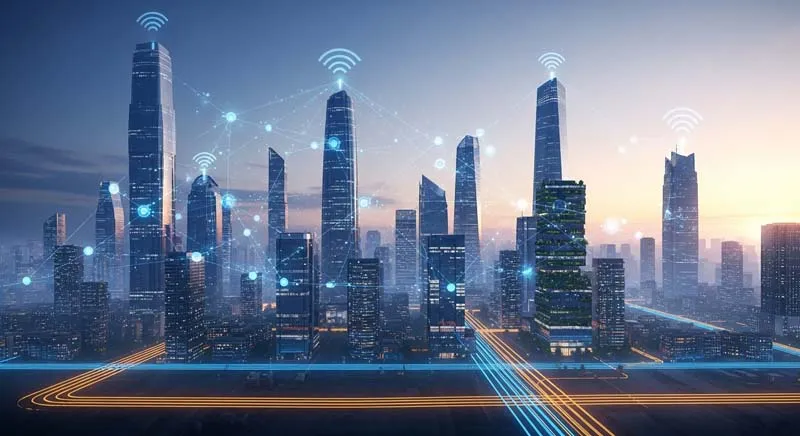
Policy Acceleration: Why Smart Metering Has Become Inevitable
In recent years, national and municipal policies have sent a clear signal. Urban infrastructure management must move toward precision, safety, and digital governance. For water utilities, planning documents emphasize leakage reduction, refined water allocation, and lifecycle asset management. As a result, traditional mechanical water meters can no longer meet modern regulatory expectations.
Meanwhile, urban gas safety has become a critical public concern. Aging pipelines and hidden risks have pushed authorities to demand earlier detection and proactive prevention. Therefore, smart gas meters equipped with reliable communication capabilities are increasingly viewed as essential infrastructure rather than optional upgrades.
Under these policy frameworks, water meters and gas meters have entered a mandatory replacement cycle in many cities. This shift reflects not only regulatory pressure but also a broader vision of resilient urban development.
Technology Evolution: From Mechanical Measurement to Intelligent Perception
Technological innovation has laid the foundation for this transformation. In water metering, ultrasonic and electromagnetic technologies now dominate new deployments. Ultrasonic water meters deliver high accuracy at low flow rates, while electromagnetic water meters excel in large-diameter pipelines and industrial environments. Importantly, both solutions eliminate mechanical wear, extending service life and reducing maintenance costs.
At the same time, gas metering has benefited greatly from NB-IoT communication technology. This network standard offers low power consumption, deep indoor penetration, and long-term stability. Consequently, gas meters can maintain continuous connectivity even in complex underground or residential settings.
Because of these advances, water meters and gas meters are no longer isolated devices. Instead, they form the front-end layer of integrated monitoring systems that combine sensing, transmission, and analytics.
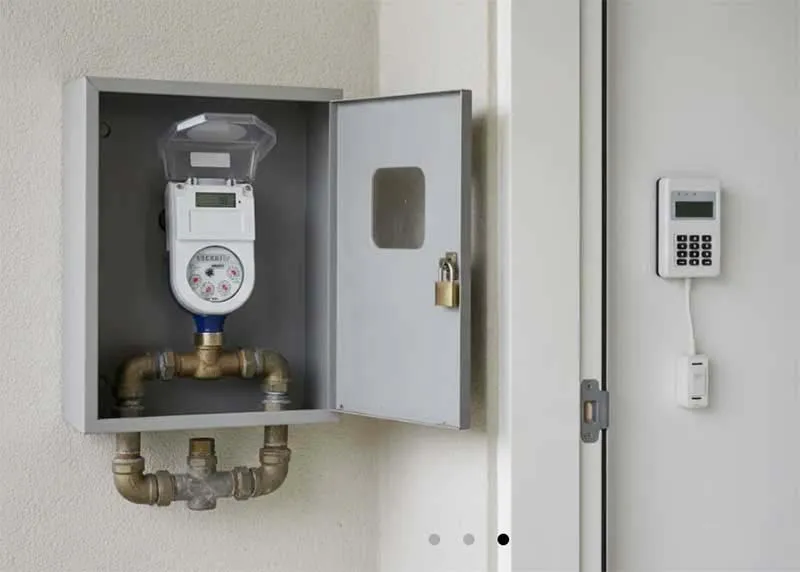
Operational Upgrade: From Manual Reading to Predictive Management
The most visible change lies in daily operations. Remote meter reading significantly reduces labor costs and improves data timeliness. However, the deeper value lies beyond efficiency.
For water utilities, intelligent analysis of night flow and continuous micro-flow patterns helps identify leaks at an early stage. As a result, utilities can intervene before small issues escalate into major losses. Similarly, pressure data collected through advanced water meters supports better network zoning and maintenance planning.
In gas management, abnormal consumption patterns often indicate leakage or unsafe usage. Smart gas meters can trigger alerts based on predefined thresholds. Therefore, operators gain valuable time to respond, while residents enjoy improved safety assurance.
In both cases, water meters and gas meters support a shift from reactive maintenance to predictive risk control.
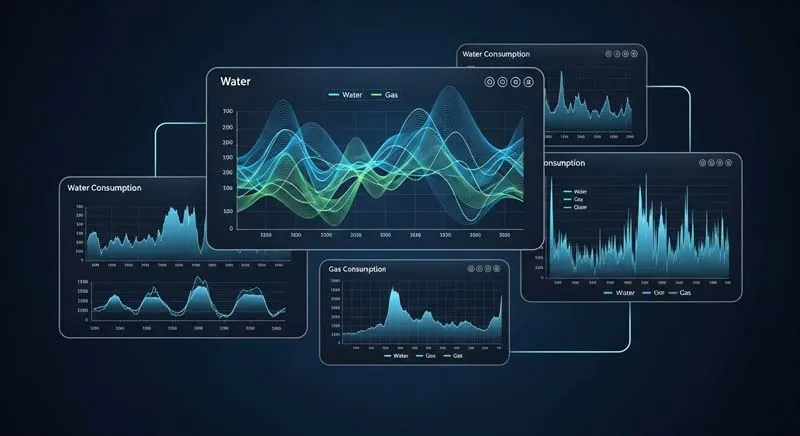
Data Intelligence: Understanding Consumption Behavior
Beyond safety and maintenance, intelligent metering generates long-term value through data insights. By analyzing consumption trends, utilities can build detailed usage profiles for residential, commercial, and industrial customers.
These insights enable fairer tariff structures, targeted subsidies, and more accurate demand forecasting. Moreover, policymakers can rely on objective data when designing conservation measures or emergency response plans.
Thus, water meters and gas meters play a critical role in transforming public utilities from experience-driven operations to data-driven governance.
Industry Impact: A New Competitive Landscape
As smart metering becomes mainstream, the industry itself is changing. Utilities now seek partners who can deliver complete solutions rather than standalone hardware. System integration, software stability, and long-term service capability have become decisive factors.
Manufacturers must therefore expand beyond device production. They need to understand urban operation scenarios, regulatory requirements, and engineering standards. Meanwhile, solution providers that combine equipment, platforms, and implementation experience gain a clear advantage.
Within this evolving ecosystem, water meters and gas meters serve as the cornerstone of broader smart utility systems.
Urban Lifeline Reconstruction: Long-Term Strategic Value
Water and gas networks represent the most vital urban lifelines. Their intelligent transformation strengthens city resilience in multiple ways. Early risk detection reduces accident probability, while real-time visibility improves emergency response efficiency.
Furthermore, during extreme weather events or infrastructure aging cycles, smart metering systems provide critical situational awareness. As a result, cities can maintain stable operations under increasing uncertainty.
In this context, upgrading water meters and gas meters is not merely a technical improvement. Instead, it marks a strategic step toward sustainable urban governance.
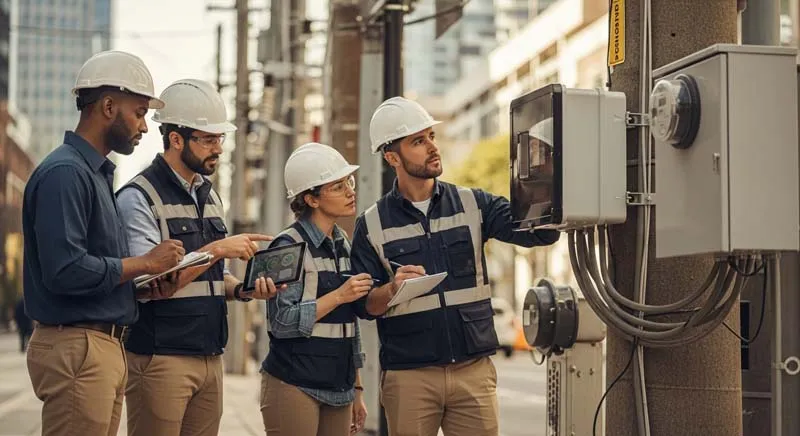
Trusted Technology with a Human Focus
Behind every intelligent system lies the responsibility to deliver reliability and trust. Shenzhen HUAXIYI Digital Technology Co., Ltd. has spent over fifteen years focusing on intelligent metering and smart energy solutions. The company specializes in remote reading systems for water, electricity, and gas meters, as well as industrial automation, building intelligence, and communication systems.
With proven expertise in upgrading traditional meters into multi-signal intelligent devices, HUAXIYI provides integrated solutions covering equipment, systems, and engineering delivery. Through long-term cooperation with energy authorities and leading real estate groups, the company continues to support the intelligent upgrading of urban public utilities.
Conclusion: Technology That Serves the City
Ultimately, the value of intelligent infrastructure lies not in complexity, but in reliability and foresight. Water meters and gas meters now stand at the intersection of policy, technology, and urban safety.
When cities can sense risks earlier, manage resources more precisely, and respond with confidence, technology becomes more than innovation. It becomes a quiet guardian of everyday life.