
Remote Meter Reading Communication Module solutions are redefining what “reliable reading” means in the utility world. Today, a meter read is not just a data upload. Instead, it anchors billing accuracy, anomaly alerts, and field efficiency. In complex environments, a 95% success rate still creates endless exceptions. However, when reliability reaches 99.9%+, operations shift from recovery to prevention. As a result, utilities gain speed, trust, and control.
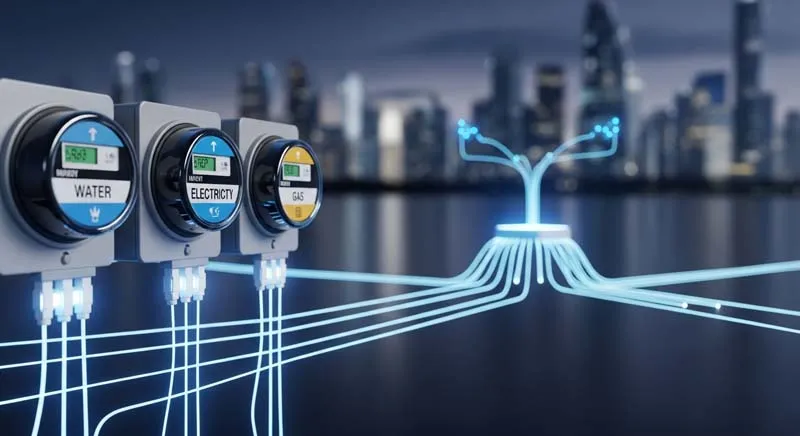
Why Near-100% Matters in Real Operations
Utility teams face harsh radio realities. Basements block signals. Concrete and steel absorb coverage. In addition, dense buildings add multipath noise. Remote regions create dead zones. Therefore, “good enough” quickly becomes expensive.
A jump from 95% to 99.9% changes the economics. First, it reduces missed reads and manual follow-ups. Next, it cuts on-site visits and complaint cycles. Moreover, it improves settlement confidence. Meanwhile, minutes-level delivery supports faster alerts for leaks, theft, and device faults. Remote reading becomes a living operational system.
Four-Mode Fusion: Complementary Links, Not Feature Stacking
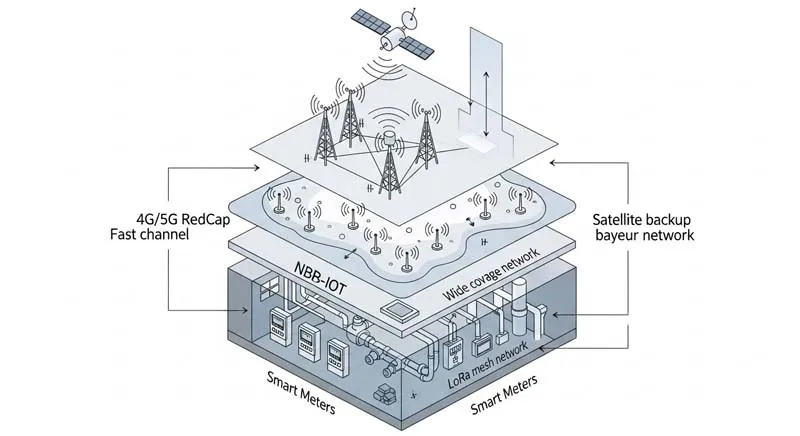
A modern Remote Meter Reading Communication Module integrates four modes: NB-IoT, LoRa, 4G/5G RedCap, and BeiDou short message. Each mode plays a clear role. Therefore, the module behaves like a resilient network, not a single pipe.
NB-IoT as the Low-Power Backbone
NB-IoT supports massive connectivity and low energy usage. It also provides wide-area coverage in many cities. As a result, it works as the primary link for most deployments. This backbone keeps the system stable over years.
LoRa for Underground and “Hard-to-Reach” Sites
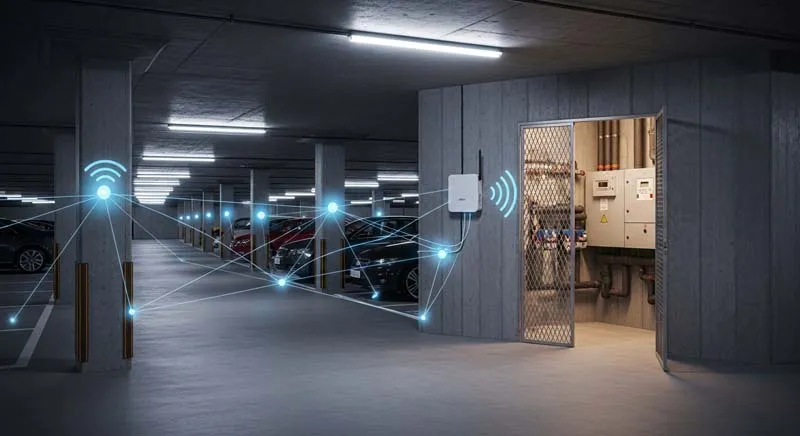
LoRa shines in basements, garages, and utility rooms. It also supports local mesh or star networks. Therefore, devices can hop or aggregate locally, then forward through gateways. This approach converts blind spots into manageable zones. For a Remote Meter Reading Communication Module, LoRa reduces the “impossible” areas.
4G/5G RedCap for Minutes-Level Responsiveness
RedCap targets lower complexity than full 5G. However, it still offers better latency than many low-power paths. Therefore, it fits scenarios that need faster cycles. For example, dynamic tariffs and rapid anomaly reporting benefit from RedCap. In addition, RedCap supports broader real-time management.
BeiDou Short Message as the Final Safety Net
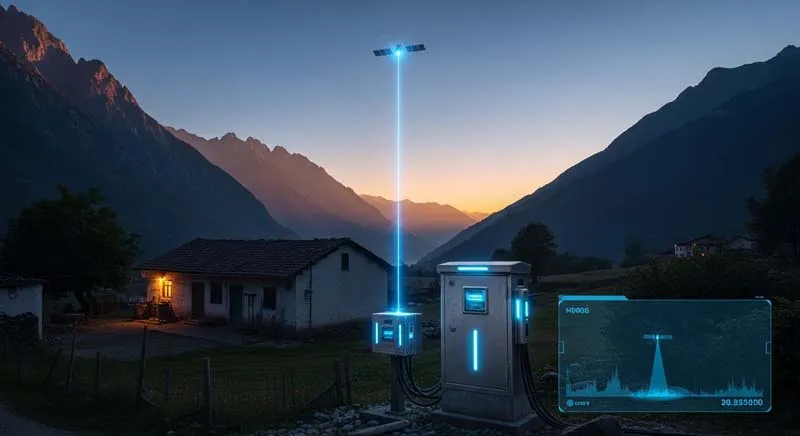
Some locations lack any ground network. Others suffer outages. Therefore, BeiDou short message provides a last-mile guarantee. This final layer makes “must-deliver” possible. In remote terrain, a Remote Meter Reading Communication Module with satellite backup protects service continuity.
SDR Dynamic Switching: From Fixed Radios to Adaptive Links
Four modes only help when the device chooses wisely. That is where SDR matters. SDR lets the Remote Meter Reading Communication Module reconfigure radio behavior in software. As a result, one platform adapts across environments and life cycles.
A practical switching policy uses measurable signals. It observes link quality, retries, and packet loss. Moreover, it evaluates time windows for reporting. It also respects battery budgets. Therefore, the module selects the best path for the moment.
At the same time, good systems avoid “thrashing.” They add hysteresis and cooldown timers. In addition, they maintain whitelists and blacklists for known sites. This discipline keeps switching stable. Consequently, reliability rises without chaos.
Reliability Engineering: How 95% Becomes 99.9%+
A high read success rate requires end-to-end design. Radio strength alone will not deliver it. Therefore, modern Remote Meter Reading Communication Module solutions combine multiple reliability mechanisms.
First, they confirm delivery with acknowledgments. Next, they use smart retries with backoff. Moreover, they add strong integrity checks. They also store data locally when networks fail. Therefore, devices can upload later without losing records.
In addition, platforms prevent reporting storms. They stagger schedules and randomize slots. Meanwhile, gateways can aggregate data and compress payloads. As a result, congestion drops and latency improves.
Most importantly, multi-path escalation closes the loop. A device tries the primary path first. However, it escalates when needed. It may move from NB-IoT to RedCap, then to LoRa gateways, and finally to BeiDou backup. Therefore, the system treats failure as a routing event, not a crisis.
Scenario Playbook: LoRa in Basements, Satellite in Remote Areas
A good Remote Meter Reading Communication Module must match the site. That is why scenario design matters.
Underground Garages and Dense Buildings
In underground spaces, LoRa self-networking can carry the last meters. Gateways then relay to backhaul links. Moreover, operators can monitor gateway health and coverage gaps. Therefore, maintenance becomes predictable. This approach also reduces repeated truck rolls.
Remote Regions and “No-Coverage” Zones
In remote zones, satellite backup ends the uncertainty. The system triggers BeiDou only when necessary. Therefore, teams control cost while protecting delivery. In addition, satellite backup supports emergency continuity during outages.
Deployment Checklist: Evaluate the Whole Chain
Do not select a Remote Meter Reading Communication Module by mode count alone. Instead, test full-chain performance in your target sites.
Start with field measurements across building types. Next, define acceptance for minutes-level latency. Moreover, evaluate battery life under realistic reporting cycles. Then, model total cost of ownership. Include devices, connectivity, gateways, and satellite usage. Therefore, procurement aligns with real outcomes.
Also, demand platform capabilities. You need device management, policy delivery, and remote upgrades. In addition, you need quality controls and anomaly workflows. These features turn connectivity into operations.
Closing: Reliability Becomes a Strategic Asset
When a Remote Meter Reading Communication Module reaches near-100% success, utilities stop chasing missing data. Instead, they start steering services with confidence. Therefore, remote metering becomes a real-time infrastructure, not a delayed report.
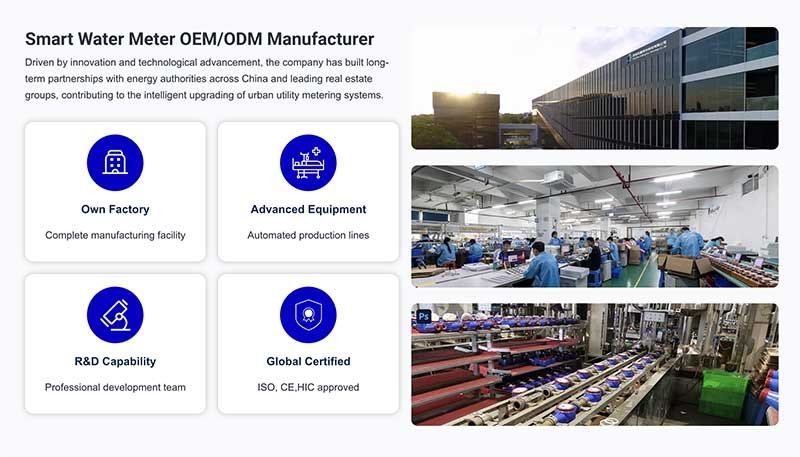
At the end of large-scale delivery, implementation matters. HUAXIYI (Shenzhen Huaxiyi Digital Technology Co., Ltd.) supports smart metering and smart energy systems, and it delivers integrated solutions from devices to engineering execution. It also helps upgrade legacy meters into multi-signal smart meters for utility and property customers.