
The challenges of water use in commercial buildings lie in “large fluctuations, frequent starts and stops, and complex allocation”
Water bills in offices are not just numbers, they are operating costs. In hospitals water use is tied to the efficiency of support functions. Schools and malls have complex patterns, with peaks and troughs alternating and big differences between areas. Many managers assume that installing meters will give them data, but in reality metering that is imprecise, that misses low flows or that cannot support sub ‑ division leads to incomplete data and prevents management systems from having a solid foundation.
Commercial and public buildings do not need a device that merely shows a number on the dial; they need metering infrastructure that can support fine ‑ grained management. The volumetric water meter is well suited to undertake this foundational role.
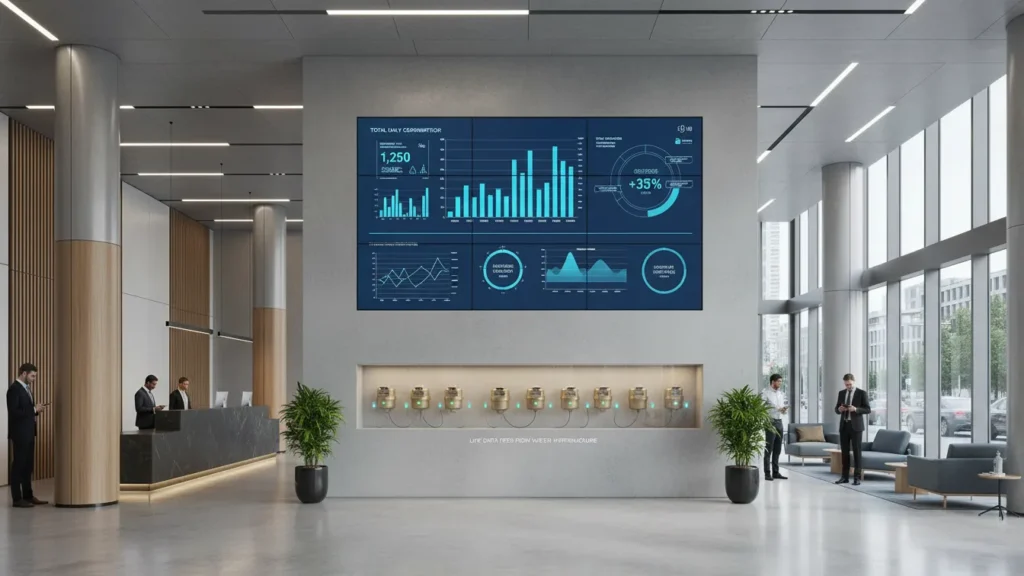
The volumetric water meter makes water data both computable and interpretable
The value of the volumetric water meter in commercial settings is that it handles change with ease. It maintains consistent performance across different flow ranges and, importantly, retains sensitivity at low flows to avoid night ‑ time or standby consumption “slipping away”. When data is complete and errors are controlled, managers can perform true water analysis rather than looking at a single total.
The product meets ISO 4064 Class C / R160 standards and its stability suits long ‑ running environments. For commercial buildings, stability means sustainability: there is no need for frequent calibration or repeated explanations of biased readings, and the data can serve as a basis for cost allocation and water saving management over the long term.
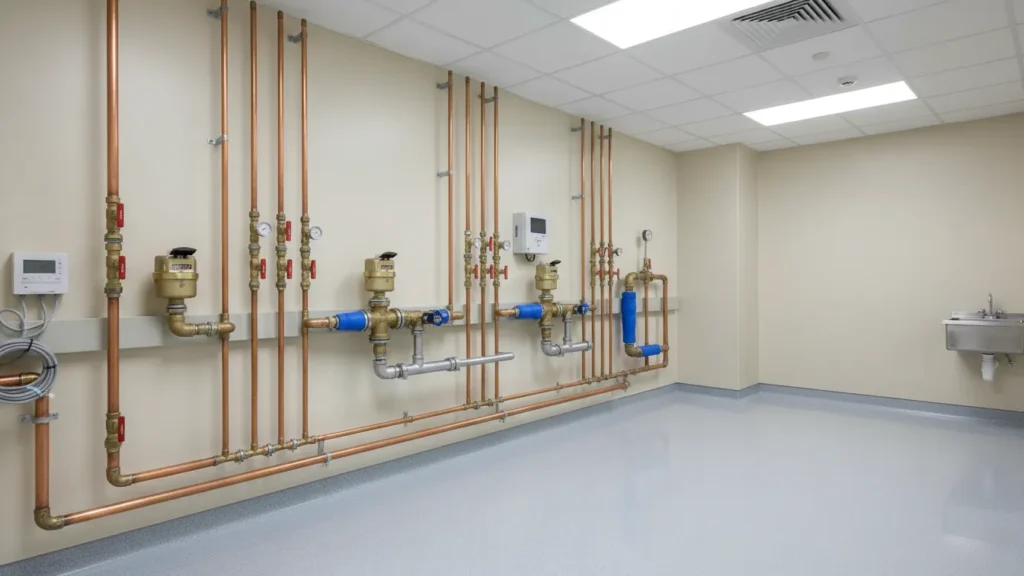
Only by moving from “sub ‑ metering” to “zonal management” can water costs truly come down
Water saving and cost reduction in commercial buildings seldom come from installing one‑off devices; they result from continuous management actions: detecting anomalies, locating the area, optimising usage habits. The volumetric water meter supports multiple installation orientations, making it easier to deploy sub‟‑‟meters in floor shafts, equipment rooms or functional areas. When each zone has reliable data, management actions have a concrete basis.
Going further, the product offers an optional pulse output, paving the way for integration into building management systems or energy platforms. This means the meter is no longer an isolated device but part of a data network. You can not only see “how much is used” but gradually build a loop of “where is it abnormal, when is it abnormal, and how to optimise”.
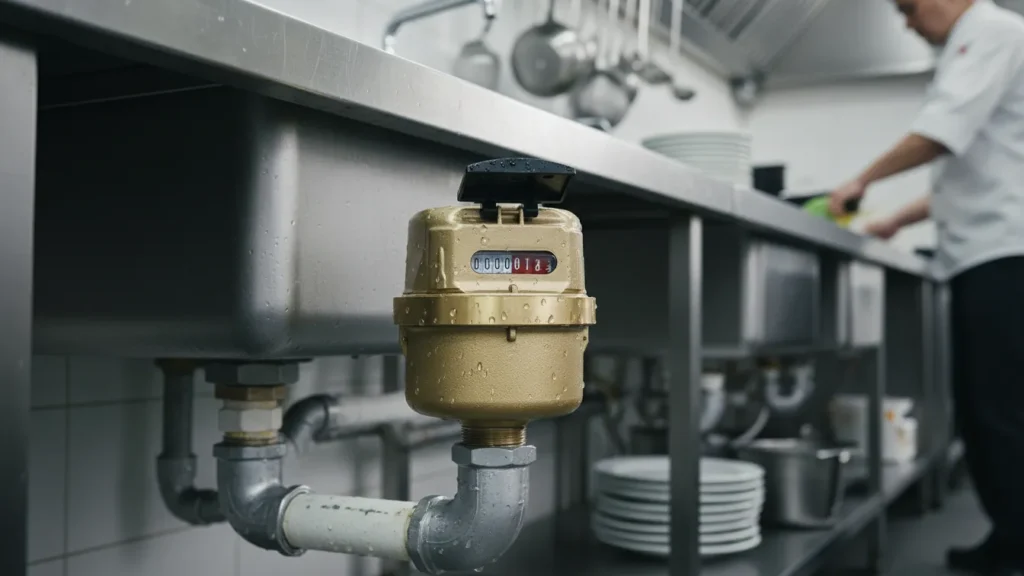
Offices, hospitals, schools and malls – why they all benefit from this type of metering
Offices care about clear allocation and tenant acceptance; hospitals require complex systems to be reliable; schools and malls emphasise ease of deployment and long ‑ term maintenance costs. With stable metering, low‟flow sensitivity and flexible installation, the volumetric water meter provides the same underlying certainty across these scenarios: more complete data, fewer disputes and more efficient management.
Conclusion: Fine ‑ grained management begins with a reliable metering base
In commercial buildings, water management ultimately depends on the quality of the data. If the data is not trustworthy, any allocation, water saving or analysis is built on sand. The volumetric water meter records micro‟flows completely, maintains long‟term stability and optimises installation and reading experience, so that water data becomes a tool in the manager’s hand rather than an unexplainable bill.
When you want to control costs, make allocations clear and implement water‟saving measures, a reliable volumetric water meter is the most solid starting point for fine ‑ grained management.