
Remote Metering Technology is entering a new stage of structural renewal. In the past, utility systems mainly focused on collecting meter data at scale. Today, that goal is no longer enough. Cities now demand finer data, faster response, lower energy use, and stronger intelligence. Therefore, Remote Metering Technology is evolving from a basic reading tool into a critical digital infrastructure for modern utilities.
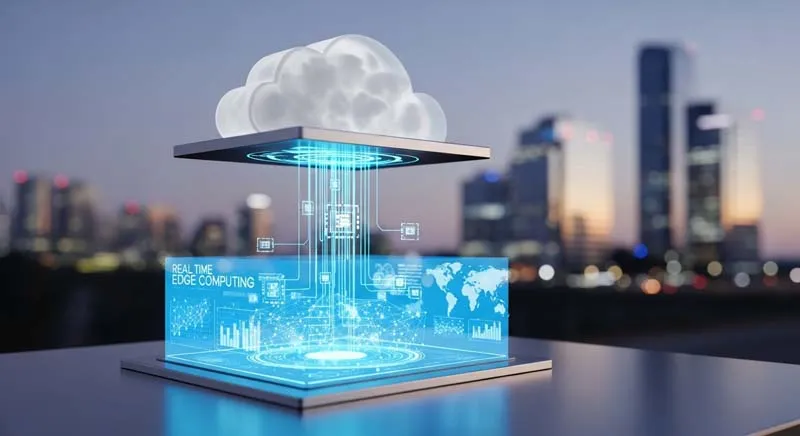
This transformation is not a simple hardware update. Instead, it reflects a broader shift in utility management. Water, electricity, and gas meters are becoming smart data nodes. They no longer just report usage. They also support anomaly detection, energy optimization, fault warning, and service improvement. As a result, Remote Metering Technology now plays a strategic role in smart city and smart energy development.
Why Remote Metering Technology Must Upgrade Now
Rising Demand for Refined Utility ManagementUtility operators today need more than periodic readings. They want real-time visibility, better loss control, and stronger operational accuracy. They also need systems that support digital governance at scale. Therefore, traditional metering models can no longer meet the needs of modern energy and public utility management.
The Limits of Traditional Systems
Older systems solved the labor problem, but they created other limits. Many devices only collected data and sent it to the cloud. They could not process information locally. They also consumed more power and often lacked long-term stability. Meanwhile, large deployments produced massive data traffic, which increased cloud pressure and delayed system response. Because of this, Remote Metering Technology now requires a full architectural upgrade.
Sensing Layer Upgrade: Better Data Starts at the Source
0.5S-Level Precision Redefines Data Quality
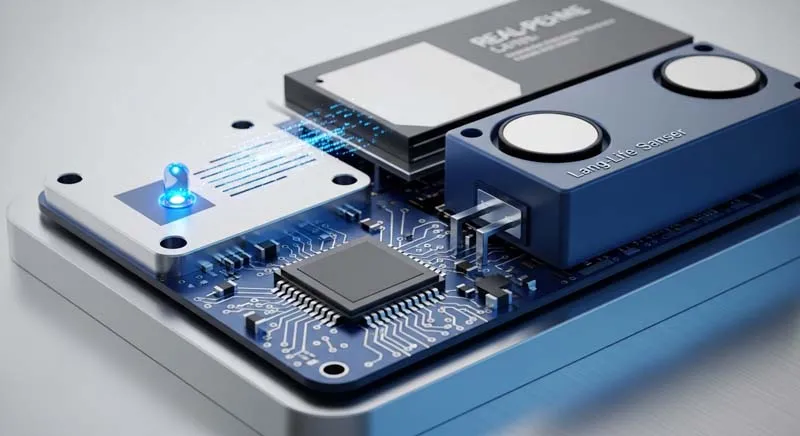
The sensing layer is the starting point of the entire system. If the initial data is weak, later analysis loses value. For this reason, higher precision has become essential. A 0.5S-level precision capability allows utilities to capture more subtle usage changes. In water systems, it helps detect hidden leaks earlier. In power and gas systems, it improves visibility into short-cycle anomalies. Therefore, Remote Metering Technology can now support more refined and reliable management.
Edge Computing Makes Field Devices Smarter
Precision alone is not enough. Devices also need intelligence at the edge. In older deployments, terminals acted as simple data collectors. However, modern endpoints can now filter signals, process records, and identify abnormal patterns locally. As a result, Remote Metering Technology no longer follows a “collect first, analyze later” model. Instead, it begins screening and judging data at the source.
This shift creates clear benefits. It reduces unnecessary uploads. It also shortens the path from abnormal event to operational action. Consequently, field intelligence improves both efficiency and response speed.
Long Battery Life Changes the Economics of Deployment
Battery endurance is another major breakthrough. A service life of more than ten years can transform field maintenance. This is especially important in underground wells, dispersed communities, and hard-to-access locations. Frequent battery replacement raises labor cost and service risk. By contrast, longer device life reduces intervention and improves deployment economics. Therefore, Remote Metering Technology becomes more practical for large-scale and long-cycle use.
Network Layer Upgrade: Connectivity Must Match Real-World Scenarios
NB-IoT Has Become a Mainstream Choice
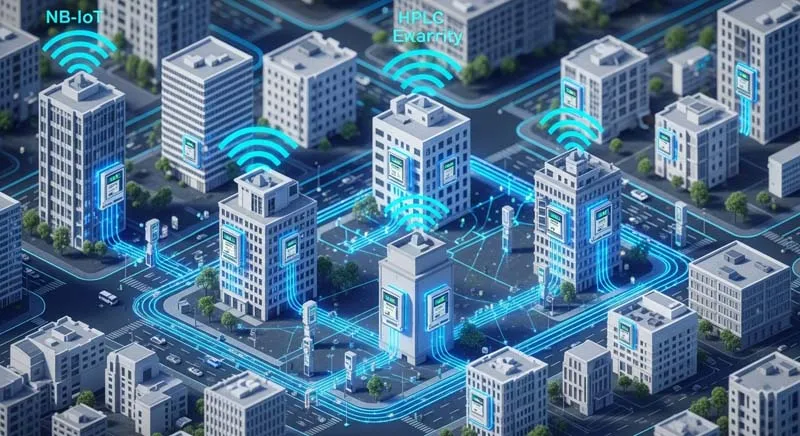
Reliable communication is the backbone of any metering system. Even the most advanced terminal loses value if the network fails. Today, NB-IoT holds more than 62% of the market in this area. This strong share reflects its real-world advantages. NB-IoT offers deep coverage, low power consumption, and large connection capacity. Moreover, it performs well in underground spaces and dense urban buildings. Because of these strengths, Remote Metering Technology increasingly relies on NB-IoT for city-scale deployment.
HPLC Dominates in Low-Voltage Meter Reading
HPLC also plays a crucial role, especially in low-voltage power metering. Its share in low-voltage meter reading has reached 67.4%. That result is not accidental. HPLC uses existing power lines for data transmission, so it reduces additional network construction. In concentrated low-voltage environments, it delivers both economic and technical efficiency. Therefore, Remote Metering Technology continues to benefit from HPLC in specific power distribution scenarios.
Hybrid Networking Is the Future
One communication method cannot fit every field condition. NB-IoT works well for dispersed terminals and difficult coverage zones. HPLC performs strongly in low-voltage clusters and power line environments. Therefore, the future of Remote Metering Technology will not depend on a single network path. Instead, it will move toward hybrid deployment based on actual utility scenarios.
This shift matters. It gives operators more flexibility, better resilience, and lower total cost. As a result, network architecture becomes more practical and scalable.
Platform Layer Upgrade: Intelligence Must Extend Beyond Data Storage
The Platform Is No Longer Just a Data Repository
In older systems, the platform mainly stored, displayed, and summarized records. That model is no longer enough. Utilities now need faster warning, clearer analysis, and better decision support. Therefore, the platform layer must evolve from a passive database into an active intelligence center.
AI and Edge Collaboration Reduce Cloud Pressure
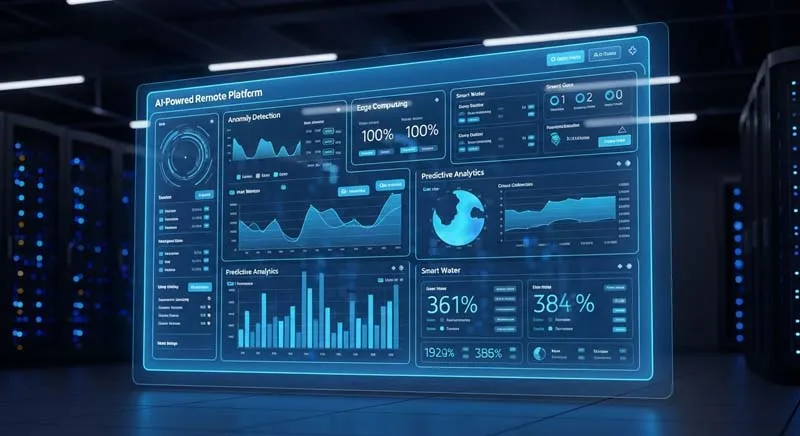
AI and edge collaboration now define the new platform logic. Terminals can process part of the data locally. They detect anomalies and compress useful information before sending it upward. Then the cloud handles broader analysis and system coordination. This layered model improves efficiency and reduces the burden on central infrastructure. As a result, Remote Metering Technology can expand without overwhelming cloud resources.
Local Anomaly Detection Improves Response Speed
Local anomaly detection offers direct operational value. It can identify abnormal water flow, irregular electricity use, gas safety risk, or communication failure at an early stage. Because the system begins detection near the source, it responds faster. Therefore, Remote Metering Technology supports proactive control instead of delayed reaction.
Data Compression Supports Large-Scale Growth
Large utility systems generate huge volumes of data every day. Uploading every raw record wastes bandwidth and computing capacity. However, when the system sends only critical data and key events, efficiency improves sharply. This approach keeps platforms responsive even as terminal numbers rise. Consequently, Remote Metering Technology becomes more sustainable for long-term expansion.
The Core Value: Three-Layer Coordination Creates Real Breakthroughs
From Isolated Functions to Integrated Architecture
The true breakthrough does not come from one upgraded component alone. It comes from coordination across sensing, networking, and platform intelligence. The sensing layer captures higher-quality data. The network layer transmits it more efficiently. The platform layer turns it into operational value. Therefore, Remote Metering Technology now works as a unified architecture rather than a set of isolated tools.
Four Direct Benefits for Utility Operators
This coordinated model creates four major gains. First, data accuracy improves. Second, energy consumption drops. Third, communication stability rises. Fourth, management becomes more proactive. As a result, Remote Metering Technology supports both day-to-day operations and long-term digital transformation.
A New Utility Management Model Is Taking Shape
From Periodic Reading to Continuous Awareness
Traditional utility management depended on periodic checks and delayed reports. That model is fading. Today, operators expect continuous monitoring and instant visibility. Therefore, Remote Metering Technology is helping utilities move from passive reading to active awareness.
From Experience-Driven Decisions to Data-Driven Action
Modern utility systems must make decisions based on real, timely evidence. Edge intelligence, precise sensing, and platform analytics all support that shift. Consequently, Remote Metering Technology is becoming a foundational layer for smart communities, industrial parks, campuses, and modern city services.
Industry Practice and Full-Stack Capability Matter
Technology progress also depends on strong implementation capability. In real projects, full-stack providers often deliver better long-term value. HUAXIYI, or Shenzhen HUAXIYI Digital Technology Co., Ltd., has built deep expertise in smart metering and smart energy systems. The company focuses on remote meter reading solutions for water, electricity, and gas. In addition, it provides integrated support in industrial control, intelligent buildings, and communication engineering. This kind of practical capability helps translate Remote Metering Technology into real project results.
Conclusion: From Meter Reading to Value Creation
Remote Metering Technology is no longer just about reading numbers from meters. It is about turning each data point into insight and each connection into long-term value. Great infrastructure does not seek attention. Instead, it quietly strengthens the systems that keep modern cities running.