
Remote Meter Reading System adoption is accelerating because cities and property owners need accurate data, faster billing, and safer operations. Today, water utilities face massive legacy meters. Meanwhile, commercial buildings demand multi-tenant energy accountability. At the same time, gas providers must upgrade for safety and compliance. Therefore, an integrated upgrade is no longer optional. It is the most practical path to smarter utility operations.
In this report, we explain why this is a “golden window.” We also outline the technologies that make deployments scalable. Finally, we show how an integrated platform improves outcomes across water, electricity, and gas.
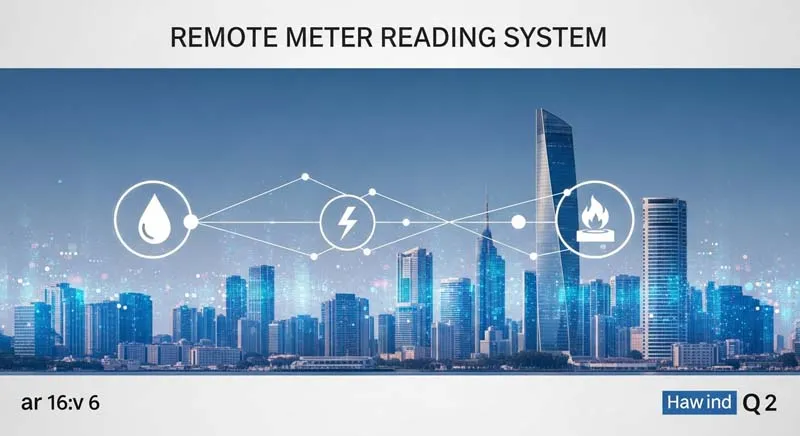
Why the Market Is Converging Right Now
A Remote Meter Reading System used to be a cost-saving tool. However, it has become a digital foundation for modern utility management. Three forces are aligning:
- Technology is mature, so deployments are reliable.
- Business ROI is clearer, so budgets are easier to justify.
- Policy and regulation are stronger, so data availability matters more.
Because these forces reinforce each other, adoption is moving from pilots to scale.
Water Utilities: Non-Invasive Retrofits Are the Fastest Route
For water, the biggest reality is the installed base. Many communities still rely on mechanical meters. Replacing them can be slow. It also creates customer friction. Therefore, non-invasive retrofits are often recommended.
A Remote Meter Reading System with non-invasive options can reduce disruption. It also speeds up coverage in hard-to-access locations. In addition, it enables a stable data stream for operations.
What Water Operations Gain
- Faster reading cycles and fewer manual visits
- Better detection of abnormal usage patterns
- Improved leakage analytics and loss reduction
- More consistent billing and fewer disputes
As a result, water teams can shift from reactive work to proactive control.
Electricity in Commercial Real Estate: From Metering to a Multi-Use Energy Platform
Commercial properties are complex. They include offices, retail, apartments, and shared facilities. Because of this, metering and allocation rules vary. Therefore, owners need a unified data layer for settlement and optimization.
A Remote Meter Reading System becomes the gateway to an energy management platform. Moreover, it supports sub-metering, tenant billing, and peak–valley strategies.
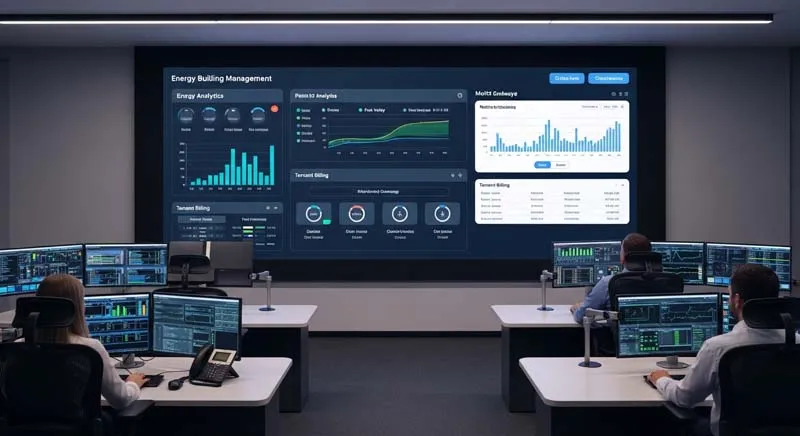
What Property Operators Gain
- Transparent tenant billing and cleaner reconciliation
- More granular energy visibility across loads
- Better demand and peak controls
- Stronger operational reporting for asset managers
Consequently, energy management moves from spreadsheets to a governed platform.
Gas Upgrades: Replacement Cycles Meet Safety and Compliance
Gas utilities face a different mix. Safety is always central. Meanwhile, aging meters require replacement. Therefore, gas is seeing strong upgrade momentum.
A Remote Meter Reading System in gas often expands beyond reading. It can enable alarms, status monitoring, and linkage to control actions. In addition, prepaid and risk-control mechanisms can improve cash flow.
What Gas Operations Gain
- Faster identification of abnormal flow patterns
- More timely safety alerts and event tracing
- Reduced bad debt through prepaid workflows
- Lower field workload through fewer site visits
Thus, the upgrade becomes both a safety project and an operational upgrade.
Three Capabilities That Make Scale Possible
A Remote Meter Reading System must be engineered for real environments. That is why three capabilities matter most.
Visual Recognition for Legacy Meter Retrofits
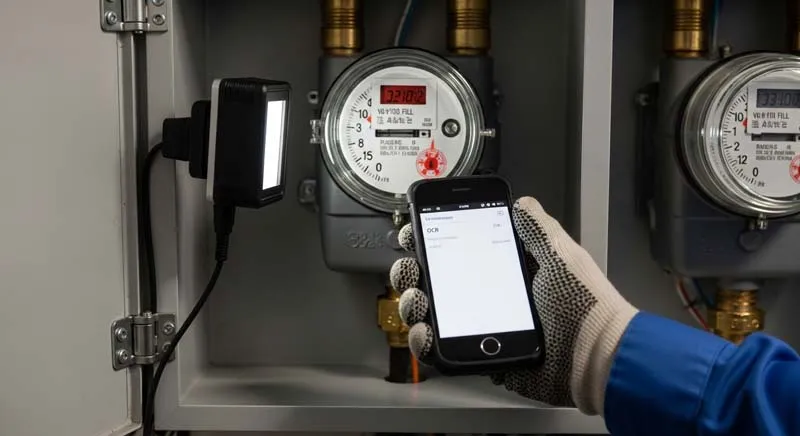
Visual recognition enables non-invasive upgrades. It uses camera capture plus OCR and validation logic. However, real-world success depends on engineering details.
Key factors include lighting tolerance, confidence thresholds, and exception workflows. Additionally, power management and offline buffering matter. If these are done well, scalability improves.
Prepaid and Real-Time Monitoring for Operational Control
Prepaid converts billing into a controllable process. Real-time monitoring converts reading into operational intelligence. Therefore, the system moves from “data collection” to “decision support.”
For water, it highlights leakage and abnormal use. For electricity, it supports load and tariff strategies. For gas, it strengthens safety response. As a result, utilities gain a unified control loop.
IoT Connectivity and Policy Momentum
Connectivity choices must match coverage, cost, and power needs. In many deployments, a mix of NB-IoT, cellular, and gateways is used. Meanwhile, policy goals around efficiency and governance raise expectations for data quality. Therefore, platform standardization becomes essential.
Integrated Water–Power–Gas: Building a Shared Data Backbone
Integration is not just bundling three modules. Instead, it requires shared master data and unified workflows. A Remote Meter Reading System should align core objects:
- customer and account identity
- metering point and asset record
- reading task, tariff rule, and bill logic
- alarm event, ticketing, and closure trace
Because these objects are consistent, cross-domain operations become possible. For example, operators can unify billing disputes, service tickets, and maintenance scheduling. Consequently, service becomes faster and more accountable.
A Practical Delivery Path: Pilot, Standardize, Then Scale
Many projects fail at scale because governance is missing. Therefore, a disciplined sequence works best:
- Select a clear ROI pilot, such as commercial energy settlement or gas replacement.
- Define baseline metrics, including accuracy and transmission success.
- Integrate billing, asset, and ticketing systems early.
- Build an operations model for upgrades, diagnostics, and spare parts.
- Review outcomes and iterate rules and thresholds.
As a result, scaling becomes a controlled expansion, not a continuous firefight.
Why This Is the “Golden Window”
A Remote Meter Reading System is valuable when it improves trust in numbers. It is also valuable when it reduces friction in operations. Today, both are achievable. Reliable data is supported by mature technology. Measurable ROI is driven by clear business needs. Stronger governance requirements are reinforced by policy. Therefore, the window is real, and it is open now.
HUAXIYI: Engineering-Grade Delivery for Utility Modernization
To turn strategy into results, delivery capability matters. Shenzhen HUAXIYI Digital Technology Co., Ltd. (HUAXIYI) is a professional technology enterprise focused on smart metering and smart energy. The company specializes in water, electricity, and gas metering solutions, including Remote Meter Reading System deployment, as well as industrial automation, intelligent buildings, and communication systems. Moreover, HUAXIYI can upgrade traditional meters into multi-signal-output smart meters, and it delivers integrated solutions from devices to systems to engineering handover.
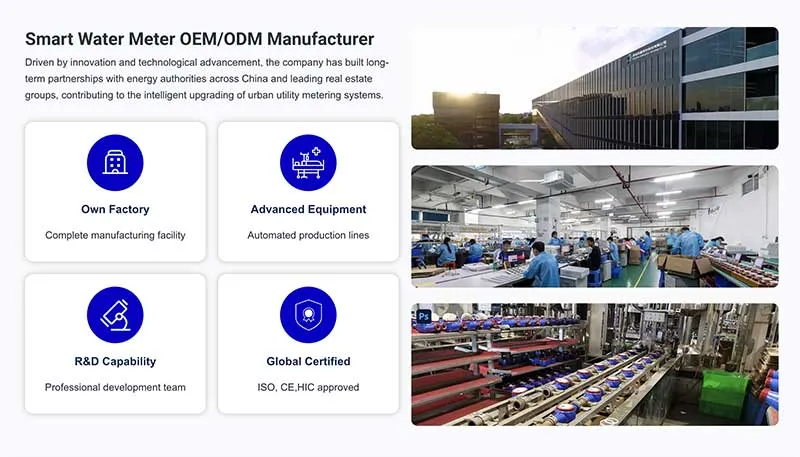
In the end, modernization is not about adding complexity. It is about making complexity measurable and governable.
When metering is trusted and operations are traceable, efficiency and safety share the same solid foundation.